Learn Spanish With Bad Bunny with these 23 Song Recommendations (Full Translations Included!)
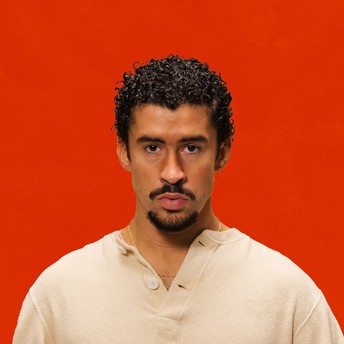
Bad Bunny was bagging groceries at a supermarket in Vega Baja and studying audiovisual communication at the University of Puerto Rico's Arecibo campus when the tracks he was uploading to SoundCloud between shifts reached DJ Luian, who signed him to Hear This Music in 2016. He was born Benito Antonio Martínez Ocasio in Bayamón in 1994 and grew up in the Almirante Sur barrio of Vega Baja.
The breakout was "Diles" in 2016, then "Soy Peor" that December, and by 2018 he was on Cardi B's "I Like It", a number one on the Hot 100. His albums run from X 100pre and YHLQMDLG through Un Verano Sin Ti, the year end number one on the Billboard 200 in 2022, to Debí Tirar Más Fotos, which in February 2026 became the first all Spanish language album to win the Grammy for Album of the Year. He also has "Callaíta", "Dakiti" and "Tití Me Preguntó" behind him, a summer 2025 residency at the Coliseo José Miguel Agrelot in San Juan, and a WrestleMania tag team match in 2021 that he and Damian Priest won.
Bad Bunny compares a past lover to a vacationer who only dropped by for the highlight reel: "En mi vida fuiste turista" (In my life you were a tourist). He looks back on the good parts like "una foto bonita" (a pretty photo), "un atardecer hermoso" (a beautiful sunset), and "una bailadita" (a quick little dance). But a tourist never sees the actual troubles behind the postcard. Bad Bunny hid his long-standing heartache the entire time, admitting: "Escondiéndome los sentimientos / Tengo miedo que me hagan más daño" (Hiding my feelings / I am afraid they will hurt me more).
He holds no grudges, though. He knows a visitor is not responsible for repairing his long-term baggage: "Y no te tocaba a ti curarlas" (And it wasn't your job to heal them). He uses the super casual Puerto Rican phrase "Si se da, pues, se da / Y si no, pues también" (If it happens, well, it happens / And if it doesn't, that's fine too) to shrug off whatever the future holds. It is a smooth, honest track about enjoying fleeting romance while knowing full well that you are keeping your deepest wounds tucked away.
This song is the ultimate soundtrack for a summer heartbreak. Bad Bunny walks us through the confusing aftermath of a relationship that just… ended. He admits he doesn't know what happened, saying, "Otro amor que de repente fracasó" [Another love that suddenly failed]. He's stuck inside his own personal raincloud while everyone else is enjoying the sunshine: "En mi cuarto está lloviendo y afuera está el sol" [It's raining in my room and it's sunny outside]. He even apologizes for not being the man his ex deserved, with the brutally honest line, "Yo quizá madure pero en otra vida" [Maybe I'll mature, but in another life].
He tries to convince himself he's fine, even saying "La estoy pasando bien / No te voy a mentir" [I'm having a good time / I'm not going to lie]. But he immediately follows it up by admitting her name keeps him awake at night. He's even started going out all the time, which he says he never used to do, just on the off chance he might see her. The whole mood is summed up perfectly in one line: "Mañana voy a terapia / Hoy voy pa'l teteo" [Tomorrow I'm going to therapy / Today I'm going to party]. It's that feeling of knowing you should deal with your sadness, but choosing to go out and dance instead.
Get ready for a wild ride with this one! "Tití Me Preguntó" starts with a question from Bad Bunny's auntie (or "Tití"): "¿Tú tienes muchas novias verdad?" [You have a lot of girlfriends, right?]. The rest of the song is his over-the-top answer. He boasts about having a new girl every day, shouting out names like Gabriela and Sofía and listing women from all over the world, from Puerto Rico to Spain. He's a classic player, claiming, "Hoy tengo una, mañana otra, pero no hay boda" [Today I have one, tomorrow another, but there's no wedding]. It's a funny and confident look at a bachelor's life.
But then, the song takes a sharp turn. After all the bragging, Bad Bunny admits he has a problem. He confesses, "Yo quisiera enamorarme / Pero no puedo" [I'd like to fall in love / But I can't]. He warns women away, telling them he'll break their hearts because he can't trust anyone, not even himself. The song ends with him sounding tired of his own behavior: "Ya no quiero ser así" [I don't want to be like this anymore]. It's a surprisingly honest ending to a song that starts as a huge party anthem.
This song is Bad Bunny at his most confident, and it's impossible not to feel it too. The whole message is a powerful declaration of self-belief, starting with the hook: "¿Quién dijo que no? Que no puedo / Yo hago lo que me dé la gana" (Who said no? That I can't? / I do whatever I want). He's not just talking about himself, though. He immediately follows up the line "El mundo es mío" (The world is mine) with "El mundo es tuyo" (The world is yours), turning his personal anthem into an invitation for everyone to feel the same way.
He spends the rest of the song listing exactly why he feels this way, and it's a masterclass in bragging. He claims his legacy is eternal, saying God told him he'll last forever, unlike what salsa legend Héctor Lavoe sang about everything having an end. He even boasts that if boxing champion Floyd Mayweather challenged him, "también lo derroto" (I'd defeat him too). It's over-the-top, fun, and completely infectious. He's telling you he's on top of the world and wants you to join him there.
Ever looked up at the night sky and thought about someone you miss? That's exactly where this song starts. Bad Bunny is Mirando las estrellas (Looking at the stars) and it makes him remember a special person. He wonders if there's anyone else out there for him, maybe even en otra galaxia lejos de aquí (in another galaxy far from here). It's a lonely thought, but he takes it to a whole new, cosmic level.
He imagines searching the entire universe for a replacement. He's had a date en la luna (date on the moon) and even says, in a pretty funny and blunt line, Me besé con un alien, tuve sexo con marcianas (I kissed an alien, I had sex with martians). But even after all that, he realizes no encuentro a nadie como tú (I can't find anyone like you). This isn't just a simple love song; it's a wild, sci-fi journey about how one person can feel so irreplaceable that not even a trip through space and time can help you forget them.
Get ready for a super confident, possessive love song from Puerto Rican superstar Bad Bunny. The whole point of "Mía" is him telling his partner to make it clear to everyone that she's taken. He sees how other guys look at her, saying, "Todos están pendiente a ti / Pero tú puesta pa' mí" (Everyone is watching you / But you're for me). He's not shy about it at all, demanding she "Dile que tú eres mía, mía" (Tell them you're mine, mine).
He mixes romantic lines like "Bebé, yo soy fan de tu caminar" (Baby, I'm a fan of the way you walk) with some pretty intense claims. He tells her to warn off other guys, even on social media: "Dile a estos bobos que dejen de darte like" (Tell these fools to stop liking your stuff). He even makes a tough-guy threat, saying he'll scare them off with a gun. It's a mix of total devotion and serious jealousy, all wrapped up in a smooth reggaeton beat.
Get ready for a song that is 100% about the club, dancing, and sex. Bad Bunny isn't trying to be subtle here. The whole track is a celebration of perreo, a very close and sexual style of reggaeton dancing. He describes a powerful woman who commands attention when she walks in: "Ella viene por ahí y nunca llega sola" (She comes around and never arrives alone), and even the tough guys notice, "To' los bandidos se sueltan las pistolas" (All the gangsters drop their guns).
This isn't a love song; it's about pure physical attraction and having a wild night. Bad Bunny is incredibly direct with lines like "En la disco, baby, yo te cojo, baby" (In the club, baby, I'll get you, baby) and even more explicit verses about what he wants to do. He sees this woman as his equal, someone who loves to party just as much as he does: "Me gustas porque tú y yo somos iguales / Siempre queremos perreo" (I like you because you and I are the same / We always want to grind). The song is also a tribute to the roots of reggaeton, with Bad Bunny proudly stating, "Estás escuchando música de Puerto Rico, cabrón" (You're listening to music from Puerto Rico, you bastard).
Ready for a trip to a secret, underwater party? "Dákiti" is all about a private and intensely luxurious romance. Bad Bunny and Jhay Cortez trade verses describing a relationship that's completely hidden from the public eye: "¿Y de nosotros quién va a hablar? Si no nos dejamos ver" (And who's going to talk about us? If we don't let ourselves be seen). They're not interested in what anyone else thinks, especially her friends: "A mí sin cojones lo que digan tus amigas" (I don't give a f*ck what your friends say).
This isn't just any secret affair, though. It's filled with expensive brands, from Dolce & Gabbana to Louis Vuitton, and he's happy to spoil her. Jhay Cortez makes it clear she's been upgraded: "Toma cinco mil, gástalo en Sephora" (Take five thousand, spend it at Sephora). The whole song feels like a boast about a wild lifestyle, promising to take her to new places and experiences. It's very direct and physical, with lines like "Tú mueves el culo fenomenal / Pa' yo devorarte como animal" (You move your ass phenomenally / So I can devour you like an animal). It's a look into a hedonistic world where the only thing that matters is the connection between two people behind closed doors.
This song is the absolute sound of a perfect summer night. Bad Bunny is trying to convince someone to live in the moment with him, wishing that "Ojalá y el verano nunca se acabe" (I hope summer never ends). He wants to make a memory under the stars, asking the moon to be their camera: "Y que la luna nos grabe" (And let the moon record us). It's a classic summer fling fantasy, where tomorrow doesn't matter because tonight is everything.
He's also incredibly direct about what he wants, opening a verse with "Sexo, playa" (Sex, beach). It's blunt, but that's Bad Bunny. He admits to checking her social media to see if she's single ("Tu Instagram yo lo stalkeo" [I stalk your Instagram]), which is a very modern and relatable touch. He sees her as a "player" who likes to play games, but he's willing to do anything for her, promising a night of dancing and fun. The whole song feels like a desperate, romantic plea to turn a fantasy into reality, just for one night.
This is one of the biggest hits from Bad Bunny, and it's a perfect example of modern reggaeton. The song is a direct and flirty conversation with a woman he's completely into. He tells her that he's usually a player, someone who is "En la calle ando suelto" [I'm out on the streets, free], but for her, he's willing to change. The whole point is in the title: "Si tú me lo pides, yo me porto bonito" [If you ask me to, I'll behave myself nicely]. He's so proud of her that he wants to post selfies just so everyone can see "lo rica que tú estás" [how hot you are].
He really admires her confidence and independence. He calls her a "bebesota" [bombshell] and notes that if her boyfriend isn't treating her right, "de una lo bota" [she dumps him at once]. He's trying to win her over with some very bold lines, even offering, "Si quieres te hago un bebé o te traigo la plan-B" [If you want, I'll make you a baby or bring you the plan-B]. It's a funny, over-the-top song about being so attracted to someone that you're ready to leave your wild days behind... or at least, you're willing to say you will.
Get ready for a wild ride. "Safaera" is a Puerto Rican slang term for something or someone that is shameless, wild, and unrestrained, and this song is exactly that. It's a tribute to a chaotic, high-energy party where anything goes. Bad Bunny and his collaborators are completely direct about what's on their minds, celebrating a woman who is so attractive that "Cualquier cosa que te pongas rompes la carretera" (Anything you wear, you stop traffic). The whole track feels like a tour through different rooms at the best, most out-of-control house party you can imagine, with the beat switching up constantly to keep you on your toes.
The lyrics are a mix of outrageous compliments, blunt propositions, and a party-hard chorus: "Hoy se bebe, hoy se gasta / Hoy se fuma como un rasta / Si Dios lo permite" (Today we drink, today we spend / Today we smoke like a Rasta / If God allows it). It's all about living in the moment. The artists are explicit about wanting nothing more than a physical connection, stating plainly, "Si te lo meto no me llames / Que esto no es pa' que me ames" (If I f*ck you, don't call me / This isn't for you to love me). It’s a loud, funny, and absolutely shameless reggaeton anthem dedicated to dancing, desire, and a very wild night.
Bad Bunny’s “Efecto” is a sultry reggaeton anthem about the intoxicating rush of desire. The Puerto Rican superstar compares his lover to a powerful drug: every glance makes him sweat, every touch sends him soaring, and the chaos of life suddenly feels perfect when they are together. He marvels at how quickly her presence changes his reality, turning a “jodido” world into a euphoric escape.
Beyond the catchy beat, the lyrics paint a vivid night of passion and unapologetic confidence. Bad Bunny celebrates the freedom of giving in to temptation, reveling in the sensory overload of music, movement, and chemistry on the dance floor. “Efecto” captures that electric moment when attraction takes over completely, leaving reason at the door and letting pleasure set the rhythm.
This song is one of the most direct breakup tracks you'll ever hear. Bad Bunny isn't sad or missing his ex, he's just done. The main chorus repeats the message over and over: "Antes yo te quería, pero ya no" (I used to love you, but not anymore). He makes it clear she has no chance, telling her "Conmigo ya no tienes break" (You don't have a chance with me) and he's not interested in her "amor fake" (fake love).
He spends the rest of the song listing all the ways he's moved on. He's found a new girl, he's hanging out with his friends, and he's enjoying his success. He uses some funny and very specific lines to shut his ex down, like when he says, "A mí ya no me cachas, yo no soy un Pokémon" (You can't catch me, I'm not a Pokémon). He even boasts about his new expensive sneakers, saying he won't get messy with her because he doesn't want to "manchar las Off-White" (stain the Off-Whites). It's a cold, confident, and very final goodbye.
Bad Bunny is not holding back in this one! "Solo De Mi" is a super direct breakup song where he makes it crystal clear that a past relationship is over and he belongs to no one. The main message is right there in the chorus: "Yo no soy tuyo ni de nadie, yo soy sólo de mí" (I'm not yours or anyone's, I'm only my own). He's telling his ex to stop calling him "bebé" because he is completely independent and has moved on.
He puts all the blame on her, saying, "Fuiste tú que lo jodió" (It was you who f*cked it up). He even claims she didn't break his heart because "ya yo lo tenía roto" (I already had it broken), which is a pretty cold way to dismiss her impact. Now, he's just focused on having a good time, celebrating the end of their relationship like it's a funeral—"Alzando botellas en tu velorio" (Raising bottles at your wake). The whole song is a powerful, and honestly a bit harsh, declaration of self-ownership.
Desde El Corazón is Bad Bunny’s love letter to Puerto Rico, served over a thumping reggaeton beat. In it, he retraces his journey “de abajo” to millionaire status while pledging never to forget the streets where he penned his first verse. Dropping area codes, beach sounds, and local basketball teams, he paints a vibrant picture of home pride: the sun that never stops shining, Christmas parranda parties on jet skis, and the ever-present rhythm of salsa and reggaeton. Every reference shouts, “I made it, but I’m still yours.”
The track is also a roll call of the island’s musical heroes. From Daddy Yankee to Héctor Lavoe, Bad Bunny tips his cap to the giants who cleared the path for his generation. By the time he signs off as “El Conejo desde el corazón,” the message is clear: success means little without honoring your roots, your people, and the culture that raised you. This is more than a brag; it’s a celebration of Puerto Rican resilience, unity, and limitless creative fire.
“Neverita” feels like a sun-drenched day on a Puerto Rican beach. Over a playful reggaeton rhythm, Bad Bunny paints the scene: a confident guy can’t take his eyes off a dazzling “chamaquita” who claims she is spending the summer solita with her corazón en la neverita—her heart “on ice.” Even though she is flooded with DMs, swatting away admirers like waves, he is ready to stand in line and try his luck.
The lyrics mix flirtation and humor. He offers to rub on her sunblock so she ≠gets burned⬄, scroll TikTok together, and turn her cold heart into something warm. She might call herself an abusadora (heartbreaker), but he is convinced he can thaw that cooler and turn a solo summer into a sizzling romance. The song captures that push-and-pull between freedom and attraction, making “Neverita” a breezy anthem for anyone flirting with the idea of love while trying to stay cool.
This song tells the story of Andrea, a woman from Puerto Rico who is fiercely independent and tired of being judged by everyone around her. She's described as both street-smart and intelligent, "Calle como un Civic, inteligente como un Tesla" (Street-smart like a Civic, intelligent like a Tesla), but she's just looking for someone who will love her for who she is, not try to change her. She's a "guerrera" (warrior) who won't put up with disrespect from anyone, but inside, she's struggling. The song says she's "joseando pa' la renta, llorando más de la cuenta" (hustling for the rent, crying more than she should), showing the tough reality behind her strong exterior.
"Andrea" is also a powerful statement about the dangers women face. The lyric "Ella no quiere una flor, sólo quiere que no la marchiten" (She doesn't want a flower, she just wants them not to let her wilt) is a plea for basic safety and respect. She wants to walk down the street without being harassed and to be trusted without being questioned. The song was inspired by the tragic real-life case of Andrea Ruiz Costas, a woman in Puerto Rico who was murdered after the justice system failed to protect her. Bad Bunny ends with a direct message to Andrea, and to all women listening: "Andrea, sé tú y que se mamen un bicho las personas" (Andrea, be you, and people can go suck a d*ck). It's a blunt and powerful call for her to live her life on her own terms, no matter what anyone else thinks.
Have you ever told yourself you're not jealous, while secretly feeling very, very jealous? That's the whole mood of this song. Bad Bunny kicks it off by repeating the title, "Yo no soy celoso" [I'm not jealous], but immediately follows it up with the real question on his mind: "pero ¿quién es ese cabrón?" [but who is that bastard?]. He tries to play it cool, promising he's not a "psycho" and won't make a scene, but then admits the truth with a simple and funny "Auch, mi corazón" [Ouch, my heart]. He's seen his ex with someone new, and it's tearing him up inside.
What makes this song great is how self-aware it is. The singer knows he's being a hypocrite. He calls himself a "caripelado" [shameless person] because he's been with tons of women himself. He even recognizes his possessiveness is a problem, calling it "machismo" [male chauvinism] and saying he deserves a "bofetón pa' mí mismo" [a slap for myself]. He's a mess of contradictions, feeling like his heart and mind are a tangled "dreadlock" in his chest. He knows it's selfish, but he can't help it: "te quiero para mí nada más" [I want you only for me].
This song is the perfect summer party anthem, and Bad Bunny is not subtle about what he wants! The whole track is basically him asking one big question: "Dime pa' dónde vamos después de la playa" (Tell me where we're going after the beach). He's already planned the next step, making a very direct invitation with the lines "Si nos secamos, yo traigo la toalla / Y de nuevo nos mojamos pero en mi cama" (If we get dry, I'll bring the towel / And we'll get wet again but in my bed). It's a classic, flirty reggaeton song with a fun, tropical mambo beat that makes you feel like you're right there on the sand in Puerto Rico.
He builds this whole party scene where everyone is drinking and dancing, and he's just focused on this one person. He's incredibly confident, telling her he'll come get her no matter how far she lives because "tú estás buena y te lo mereces" (you're hot and you deserve it). He even brings up her boyfriend, comparing himself to the reggaeton legend Don Omar by saying he's going to steal his girl. The song ends with what sounds like a real party, with people shouting and laughing, making you feel like you've just been dropped into the middle of the fun.
Bad Bunny starts this song by talking about himself, but it quickly becomes about so much more. He traces his own path from being an altar boy to a huge trap star, admitting he's done things for money and has never even been loyal to his barber. He says he's a "super estrella, pero humano primero" (superstar, but human first) and that his Puerto Rican roots are what make him a winner. He's proud of his success and how it forces his competition to be better.
But then, the song's focus shifts completely. Bad Bunny gets angry about the state of the world, specifically racism and injustice. He says his good day was ruined by news of a shooting and a president who does nothing. He directly calls out the double standard where "Un negro con pistola, ya eso es un criminal / Pero un blanquito se la engancha y dicen que es un hobby" (A Black man with a gun, that's a criminal / But a little white guy straps one on and they say it's a hobby). He argues that people get upset about him winning a 'Composer of the Year' award but ignore the real problems, like police brutality and violence against women. He ends by saying if he could change the world, he would, but for now, the best prize is to "Poder ser yo, dejarte ser tú" (To be able to be me, and let you be you).
Ever get hit by a wave of nostalgia for a past relationship? That's exactly where Bad Bunny is in "Como Antes". He starts by thinking back to the very beginning, remembering "la primera vez / Que te hice reír" (the first time / I made you laugh). He misses the good old days when he would do anything for his partner, even when she'd change the station in the car and say, "Nada de reggaetón, ponme otra canción" (No reggaeton, put on another song).
To try and get that old feeling back, he does some pretty funny and specific things. He says, "Borré el Netflix, fui a Blockbuster y una movie alquilé" (I deleted Netflix, I went to Blockbuster and rented a movie) and even tried hitting her up on Messenger and MySpace. He lists off a ton of things from the past, like playing with Tazos (those little collectible discs from chip bags), writing letters, and listening to old Shakira songs. But in the end, he has to face the truth: "El pasado no vira" (The past doesn't come back), and the song's main idea keeps returning: "Ya nada es como antes" (Nothing is like it was before).
“Ojitos Lindos” paints the thrill of stumbling into a love so pure that it feels like hitting the accelerator with no brakes. Bad Bunny and Bomba Estéreo weave a tropical daydream where one hypnotic gaze — “esos ojitos lindos” — is enough to reboot the heart. The singer admits he had stopped holding hands and sending sweet messages, yet a chance collision with this special someone resets everything. Time melts away, mistakes stop being sins, and even a chaotic ride feels perfect as long as they are side by side.
Beyond its flirtatious vibe, the song celebrates living in the now. It swaps flashy status symbols for sunflowers, seashell hunts, and dancing through “doscientas canciones.” Each look becomes a tiny sunrise, each kiss a brand-new life. “Ojitos Lindos” is ultimately a reminder that love can be simple, spontaneous, and wonderfully imperfect — all it takes is two hearts, a tropical beat, and those pretty little eyes.
This song is one big, defiant statement after a bad breakup. Bad Bunny kicks things off by saying he got burned the last time he trusted someone, so he's completely done with love. He puts it pretty bluntly: "Me compré una forty y a cupido se la vacié" (I bought a forty [a type of gun] and emptied it on Cupid). From now on, he's not falling in love again.
He tells his ex that he's actually better off without her and has already found other women. The chorus is the core of the song, where he declares that if he was a bad guy before, he's even worse now, and it's all her fault: "Si antes yo era un hijueputa ahora soy peor / Ahora soy peor, ahora soy peor por ti" (If I was a son of a bitch before, now I'm worse / Now I'm worse, now I'm worse because of you). He's decided to focus only on himself, partying, and making money, saying "Pa'l carajo el amor verdadero, yo sólo pienso en hacer dinero" (To hell with true love, I only think about making money).

